
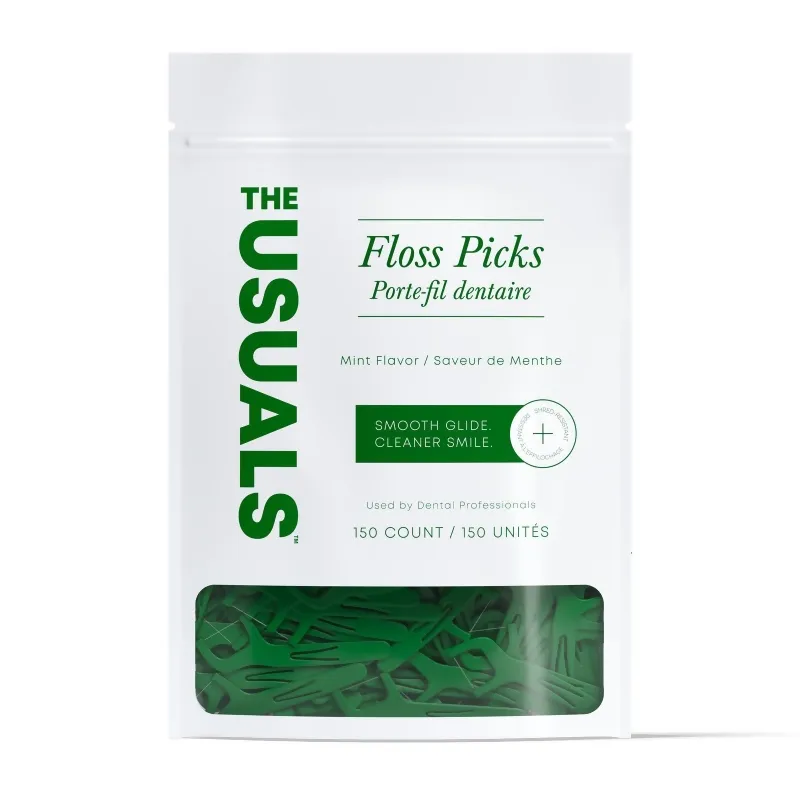
Smooth glide. Fresh smile.
Effective oral care goes beyond eliminating the visible debris — it's about tackling what’s out of sight as well. Food particles lodged between your teeth can contribute to things like bad breath, cavities and poor gum health. While brushing remains the cornerstone of dental hygiene, flossing can support plaque removal in areas that brushing might not reach.
For after meals and daily maintenance of oral health, The Usuals Floss Picks are designed to smoothly glide between teeth to help remove plaque and debris. The powerful mint flavor helps to freshen breath, while the shred-resistant floss and lightweight handle make them easy and effective to use.
The Usuals Floss Picks makes healthy smiles simple — offering convenient, portable flossing and comfort for little hands or those with limited grip, all in a value-sized pouch of 150. Crafted with BPA-free materials and Ultra-High-Molecular-Weight Polyethylene (UHMWPE) dental floss, these floss picks offer exceptional strength and durability, ensuring a flawless flossing experience every time.
How do I use The Usuals™ Floss Picks?
Gently guide floss between teeth. Slide floss up and down along each tooth. When using the fold-out dental pick, gently glide the pick between your teeth and softly work it in and out to loosen food particles. Dispose of floss pick after each single use.
Are The Usuals Floss Picks safe for children?
Adult supervision is recommended for children under the age of 10.
How often should I floss?
The American Dental Association (ADA) recommends flossing at least once daily. Flossing before bedtime may be more ideal to avoid having debris stuck between teeth for a prolonged period of time.
Do kids need to floss?
Research suggests that as soon as your child has two teeth that can touch, or can potentially have debris stuck between them, they should begin to floss. This is often as early as two to three years of age.
Should I floss before or after brushing?
Evidence shows that flossing prior to brushing may help remove more plaque between the teeth. This also allows the process of brushing to wash away extra debris that becomes loose during flossing. Flossing before brushing may also be more effective at maintaining fluoride levels on tooth enamel.
What does it mean if my gums bleed when I floss?
It can be common to see blood when one does not floss as frequently as one should. With continued flossing, however, you will likely notice less bleeding as your gums become healthier and stronger. If bleeding continues or gums remain red or swollen, contact your dentist.
In what other ways can I contribute to my dental health?
Good oral hygiene plays a part in your overall wellness. In addition to flossing once daily, the American Dental Association (ADA) recommends that you brush your teeth for at least two minutes, twice daily. Using mouthwash after brushing and flossing can also help protect your mouth and teeth from harmful bacteria. Avoiding overly sugary foods and beverages is also a good idea to help promote oral health.
| Brand: |
 |
| Categories: | Personal Care Products |